Search
Search Keyword: Total 102 results found.
Tag: Imaging Ordering

“Measuring brain activity using functional near infrared spectroscopy: a short review” by Felix Scholkmann and Martin Wolf looks at the various methods for performing fNIRS and some applications that demonstrate why this non-invasive, safely applicable, portable and cost-effective method is now an integral part of the techniques used in neuroscience.

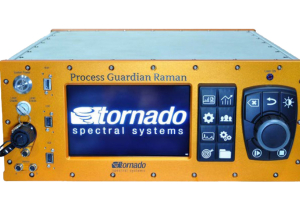
This Product Focus is on Raman Spectroscopy; a number of companies have provided information on their key products, their applications and features.

The TEL-1000 MW InSb high-performance infrared camera has been launched by Telops. The camera covers the 3.6 µm to 4.9 µm wavelength range and can be customised to cover an extended range from 1.5 µm to 5 µm. It can capture up to 200 frames per second at full frame (640 pixels × 512 pixels) and up to 600 frames per second when windowing (320 pixels × 512 pixels). It features patent-pending real-time processing and real-time temperature calibration. It can also be equipped with automatic exposure control in order to adjust the exposure time according to the scene’s dynamic temperature varions.

The SpectroCam multispectral imaging camera from Ocean Thin Films is now available with new analysis software. The software has a simple, intuitive graphical interface that allows users to quickly perform several image processing and analysis functions. Results can be viewed as live image output or saved to a variety of image file formats. The software processing is a useful tool for extracting MSI information and can even create colourised NIR images. In addition, the analysis portion of the software provides live, quantitative information regarding image intensity as a function of spectral wavelength for a user-defined image or image cross section. Applications include water quality measurement, product screening, machine vision, medical imaging, surveillance and authentication.

Tags: Imaging

Telops has introduced the new improved Hyper-Cam Weatherproof which provides high-performance hyperspectral imaging capabilities but with an upgraded weather­proof enclosure. It has an extended temperature range which covers –20°C to 40°C and can be stored at temperatures between –40°C and 70°C. The system is IP rated, with a high resistance to rain and dust, enabling users to benefit from high quality spectral imaging without worrying about changing environmental conditions during field measurements. The upgrade enables the system to be easily used in a number of applications including stand-off chemical detection and identification, military target signature analysis, flare measurement and leak detection.

Tags: Imaging

An imaging remote chemical sensing system based on the combination of a Michelson interferometer with a focal plane array detector. Developed for a wide range of applications it enables the detection, identification and quantification of a wide range of organic molecules in the atmosphere.

Micro imaging Raman system for applications in biologics (solids and liquids, comparability, biosimilars, batch release testing), forensics, pharmaceuticals, polymers and semiconductors. It can measure full spectra from 3200 cm–1 to 200 cm–1 including Amide I, II and III, S–S, S–H and C–H bonds. It measures 14″ wide by 11″ high and weighs about 10 lbs (~4.5 kg).

Tags: Raman Imaging

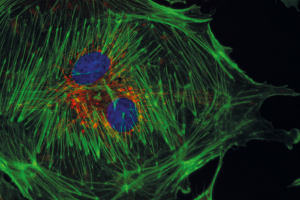
Micro and macro portable real time Raman imaging system. Uses a wavelength sweep which can acquire the full Raman spectrum of all the positions of an image at once. Can acquire and display both the Raman and visible images simultaneously.

Researchers from Purdue University in the USA have created a new imaging technology based on Raman spectroscopy that reveals subtle changes in breast tissue, representing a potential tool to determine a woman's risk of developing breast cancer and to study ways of preventing the disease.

Tags: Raman Imaging

Due to the importance of imaging mass spectrometry in the life sciences, the Joint Committee of the Deutsche Forschungsgemeinschaft (DFG, German Research Foundation) has decided, as part of the “Imaging Mass Spectrometry in the Life Sciences” initiative, to equip nine universities with major instrumentation systems.

After an introduction to MALDI, DESI and SIMS, the authors describe their main applications in forensics, as well as the advantages provided in terms of sample preparation over approaches routinely used in toxicological laboratories.

Ninety-five delegates attended the 8th Confocal Raman Imaging Symposium in Ulm, Germany, from 5 to 6 October organised by WITec. Featuring a global line-up of Raman Imaging experts, the symposium gave scientist the opportunity to see the newest applications and relevant instrument configurations.

Tags: Raman Imaging

Thermo Fisher Scientific has introduced a new imaging ATR accessory offering enhanced spatial resolution and high-speed data acquisition capabilities for FT-IR chemical imaging applications. This accessory has been designed to seamlessly and effortlessly integrate with the company's range of FT-IR microscopes to enable improved chemical imaging of challenging samples. It is of particular benefit to manufacturers of composite structures, paper products, pharmaceutical dosage forms, biological tissues, polymer films and coatings. It simplifies the task of obtaining high-quality IR spectra in cases of samples that are difficult to prepare for transmission analysis. Observable features in specimens, such as defects, particles, fibres or inks, may be analysed with improved spatial resolution. It can quickly snap into the sample hold feature of the Nicolet iN10, Nicolet iN10 MX and the Nicolet Continuµm microscopes without the need for tools. All standard optics remain available, avoiding any concerns of alignment or down time when switching between sampling modes.

Princeton has introduced the PyLoN series, a new line of controller-less, cryogenically-cooled CCD cameras, designed for quantitative spectroscopy applications that demand high sensitivity. The first commercially available models in this series are the 100 and 400 dual-amplifier modules that utilise 1340 × 100 and 1340 × 400 sensors, respectively. In creating the new platform, the company redesigned their Spec-10 family of cameras to remove the external controller, increasing experimental flexibility while improving the ultra-low-noise electronics. Liquid nitrogen cooling in the new cameras virtually eliminates dark current, indium metal seals enhance vacuum longevity and binning noise has been reduced from the levels of the Spec-10 platform. Other features include ADC conversion up to 4 MHz, kinetics mode which allows microsecond-resolved kinetic spectral acquisition and custom sensor mode for increased control over the camera readout. The cameras operate on 32-bit and 64-bit Microsoft Windows operating systems and are fully supported by LightField 64-bit data acquisition software featuring IntelliCal wavelength and intensity calibration packages. The GigE interface allows remote operation via a single cable without the need for custom frame grabbers. The cameras area available with or without a 40 mm shutter.

Tags: Imaging

A new solution for the analysis of trace evidence is now available from Elliot Scientific. The new Elixir microscope from Craic Technologies offers multiple analytical techniques in a single instrument for the forensic scientist. Users can conduct microspectroscopy, high-resolution imaging, Raman microspectroscopy and glass refractometry with one easy-to-use tool. The system integrates an advanced spectrophotometer with an optical microscope and easy-to-use software, which enables scientists to quickly analyse all manner of microscopic samples of trace evidence using high-sensitivity multiple analytical techniques.

Tags: Raman Imaging

Researchers have used mass spectrometry imaging to uncover exactly how a human egg captures an incoming sperm to begin the fertilisation process, in a new study published this week in Science. The research identifies the sugar molecule that makes the outer coat of the egg “sticky”, which is vital for enabling the sperm and egg to bind together. Researchers across the world have been trying to understand what performs this task for over 30 years.

Malvern Instruments has produced an application note entitled NIR chemical imaging for tablet deconstruction: a case study for solid dosage forms to demonstrate how data derived from reverse engineering of pharmaceutical tablets can aid the fight against counterfeit drugs. Using the SyNIRgi near infrared chemical imaging system, they have been able to collect data detailed enough to characterise the formulation and processes used to create individual dosages. Results can be compared to both the original manufacturer specifications and a database of known counterfeits.

Malvern Instruments Ltd
Issue: 22-06
RSN: 140

Princeton Instruments have introduced several new cameras based on their eXelon back-illuminated CCD and EMCCD detector technology. The new sensors provide good photon detection capabilities across a wide spectrum from 200 nm to 1100 nm and are particularly beneficial for applications requiring enhanced sensitivity in the blue and near infrared regions. The new technology will be featured in the company's PIXIS and ProEM deep-cooled cameras and is available in several pixel-array formats: 1340 × 100 and 1340 × 400 CCD cameras for spectroscopy and 512 × 512 to 2048 × 2048 CCD cameras for spectral imaging. The new cameras will target a wide variety of applications in both the life sciences and physical sciences.

Nati Salvadó, Salvador Butí and Trinitat Pradell have used a number of techniques to investigate changes in pictorial techniques in Catalan paintings in the 15th century. The combination of different techniques is of particular value. The use of synchtrotron radiation as a light source is also an advantage.

One of the main techniques for measuring and monitoring mental activity, functional near infrared spectroscopy (fNIRS), can often be impaired because a person’s hair gets in the way. A team of researchers at the University of Texas at Dallas and the University of Texas at Arlington have developed a “brush optrode”, which provides increased sensitivity with fibre tips designed to thread through hair to enhance scalp contact.